Launch offer — valid today only

📄 Digital book in PDF · read it on your phone or print it

Your State Turf & Ornamental Category Exam, Illustrated One Topic on Every Page

Grass ID, crabgrass and nutsedge, white grubs, chinch bugs, brown patch, dollar spot, scales and mites, IPM and sprayer calibration. One drawn page per topic, so you can review in short sessions after work and find any answer at a glance. 66 illustrated pages.

YES, I WANT THE 66 ILLUSTRATED PAGES

🔒 Secure checkout · PDF by email · 30-day guarantee

Every topic, its own pageEach weed, pest and disease drawn, with the explanation right next to it
66 illustrated pages9 parts, from the Core vs. Category exams to the exam-day checklist
Up-to-date sourcesFederal standards (EPA 40 CFR Part 171) and FIFRA, with state-specific items marked to check in your state's manual
PDF by emailFormat

Look Inside the Book

Every page has one big drawing and a box with the numbers, rules and steps you need to know:

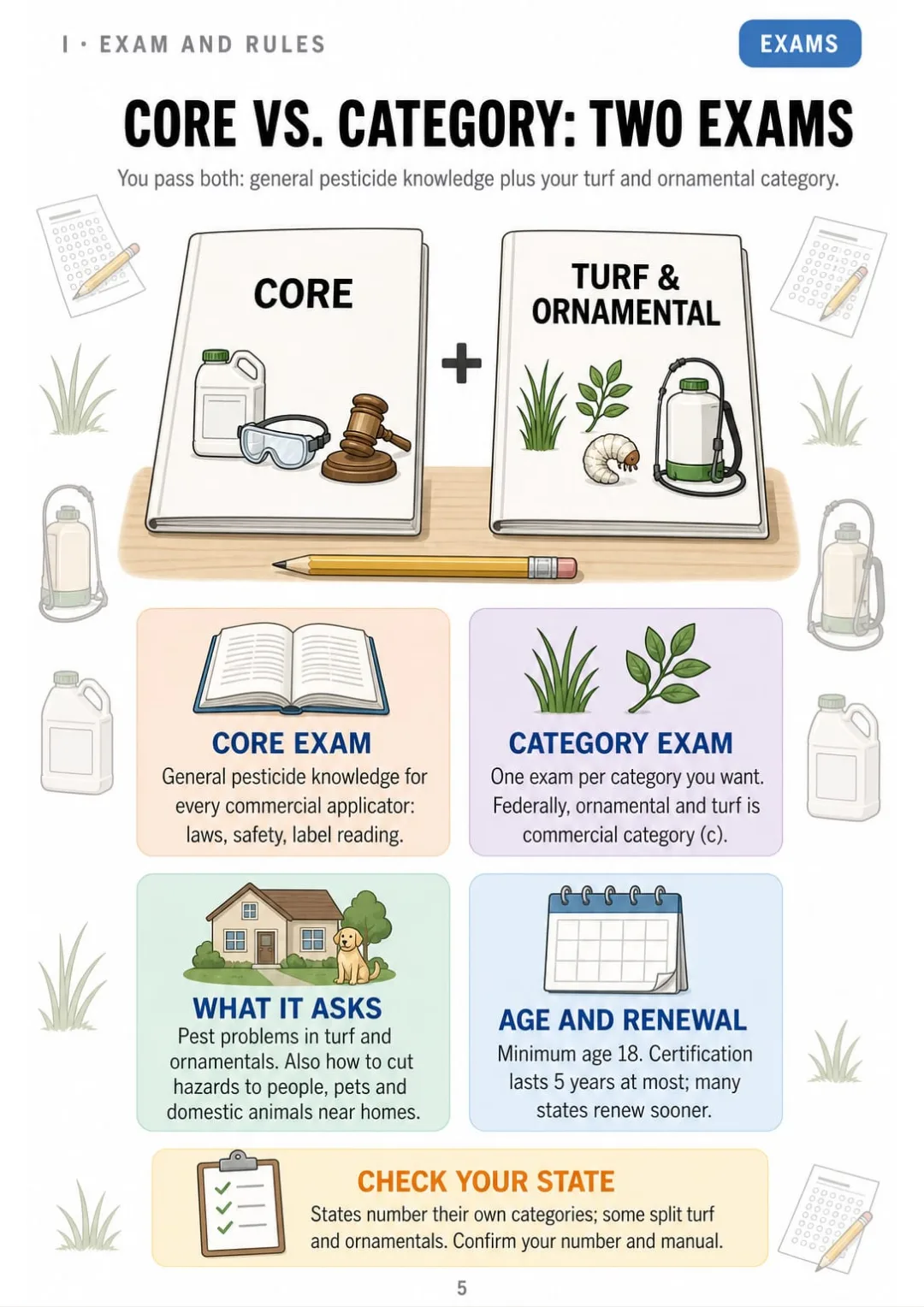
Core + category exam: federal category (c), states renumber it
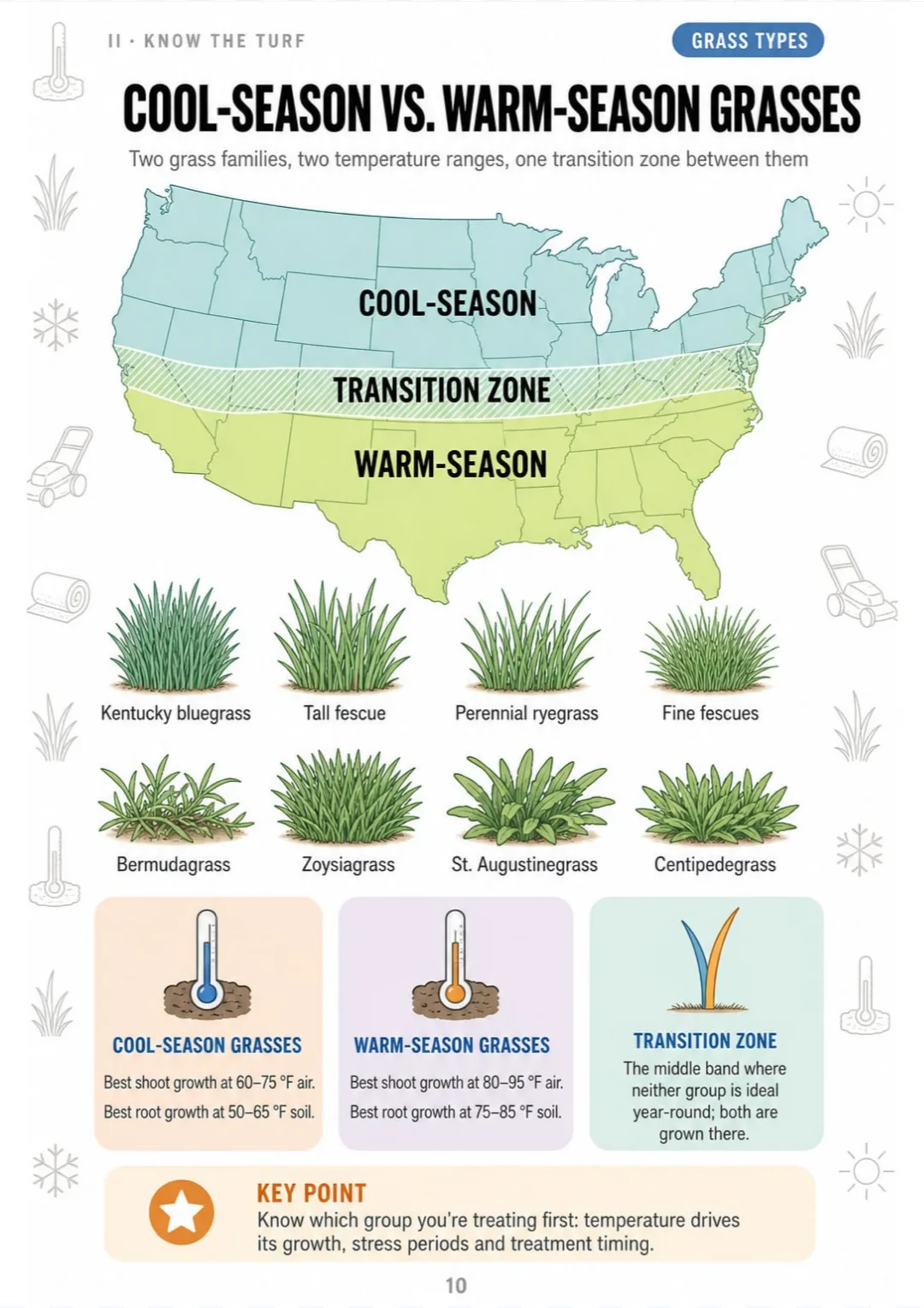
Cool-season grasses grow best at 60–75 °F, warm-season grasses at 80–95 °F.
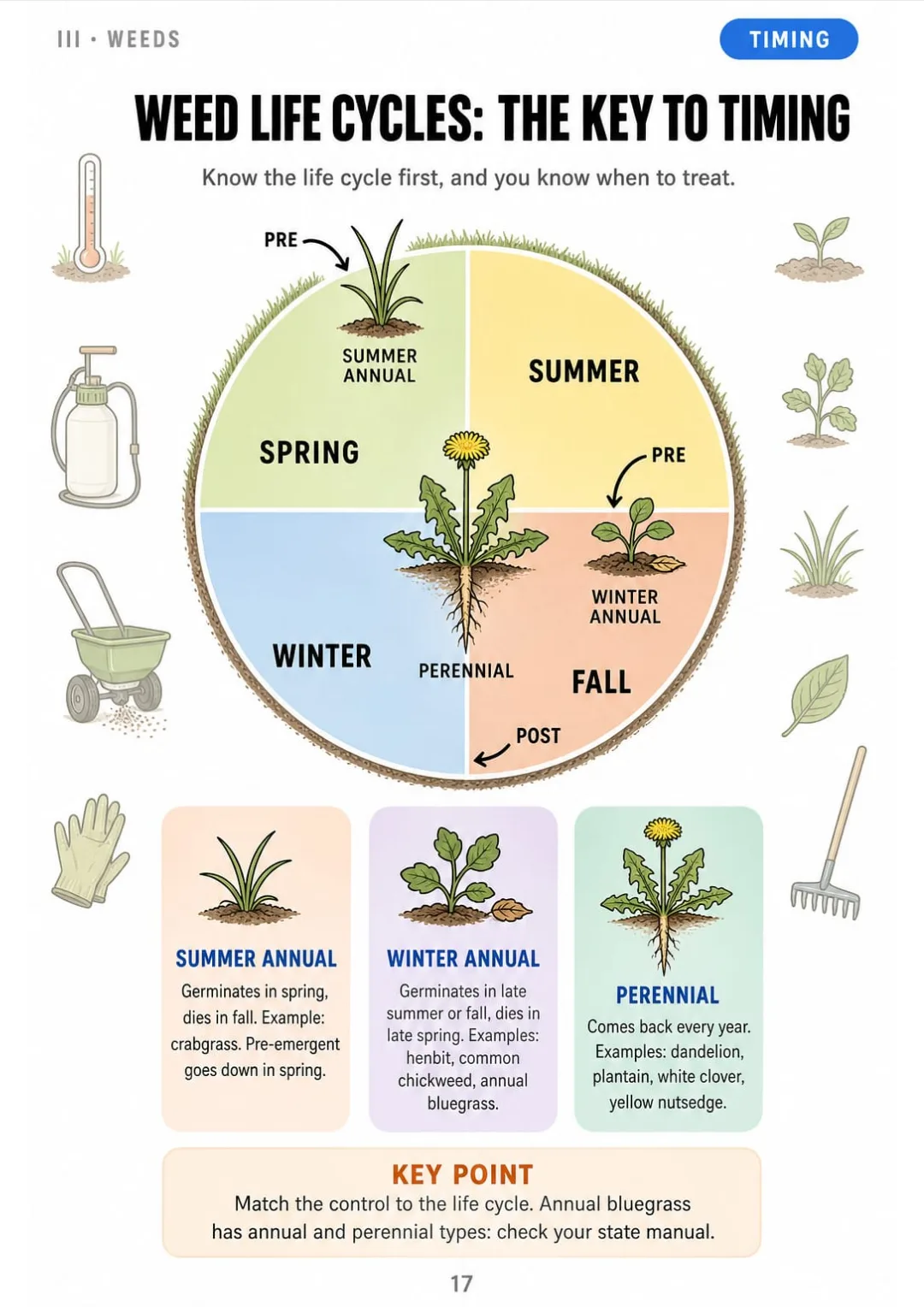
Summer annual, winter annual, perennial: each one has its own control window.
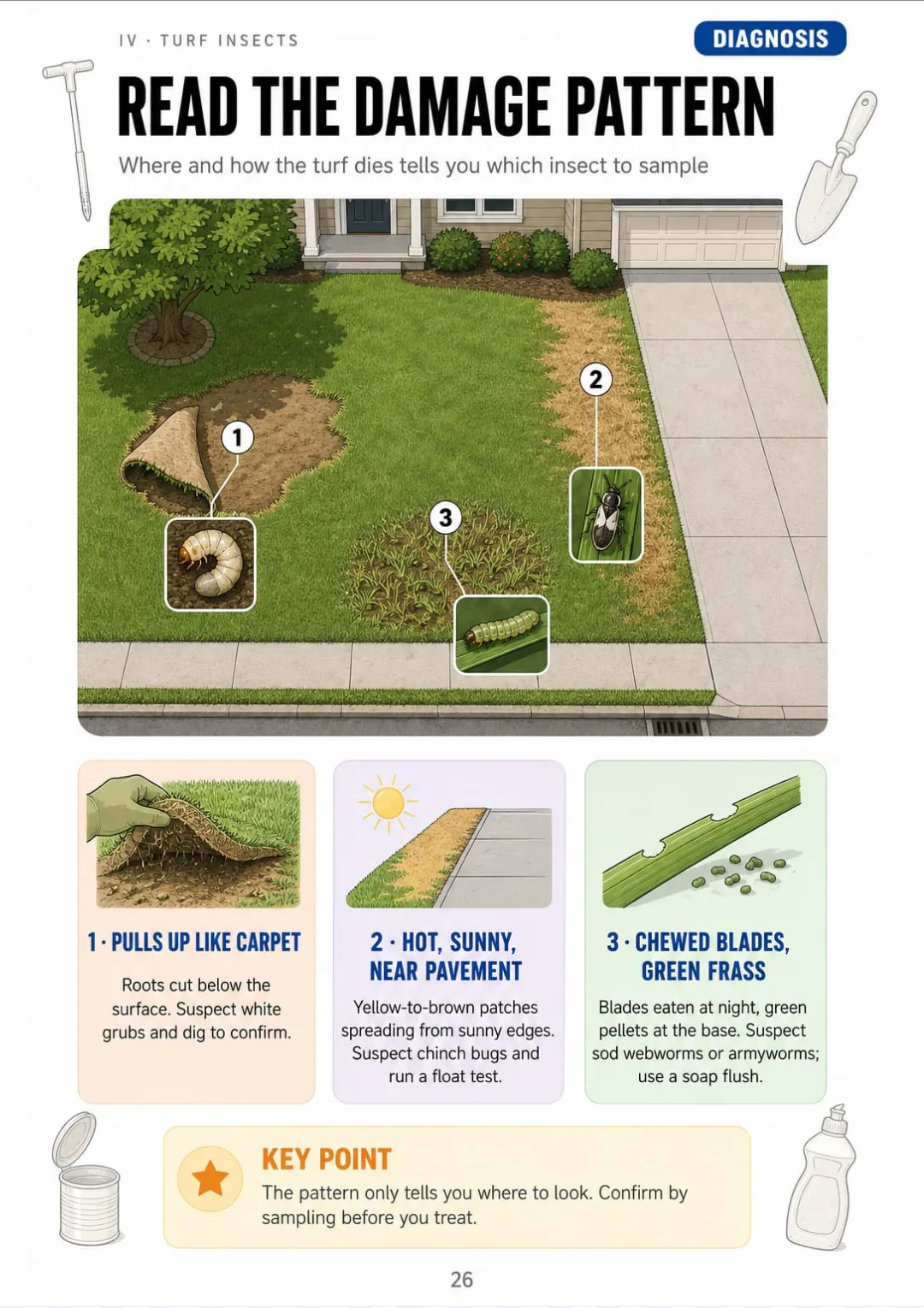
Carpet-like turf = grubs · sunny edges = chinch bugs · chewed blades = caterpillars
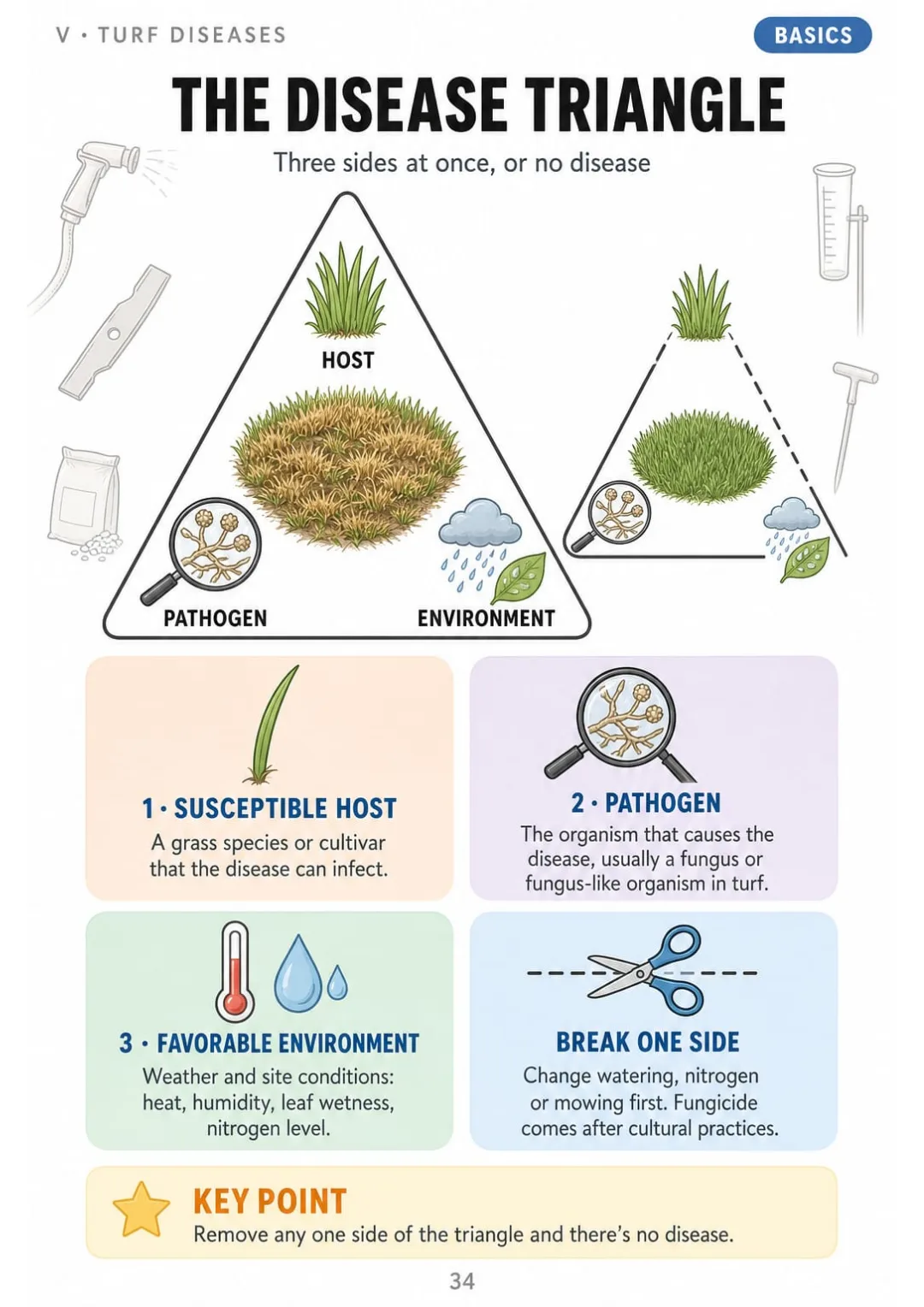
Host + pathogen + favorable environment: take one away and there's no disease.
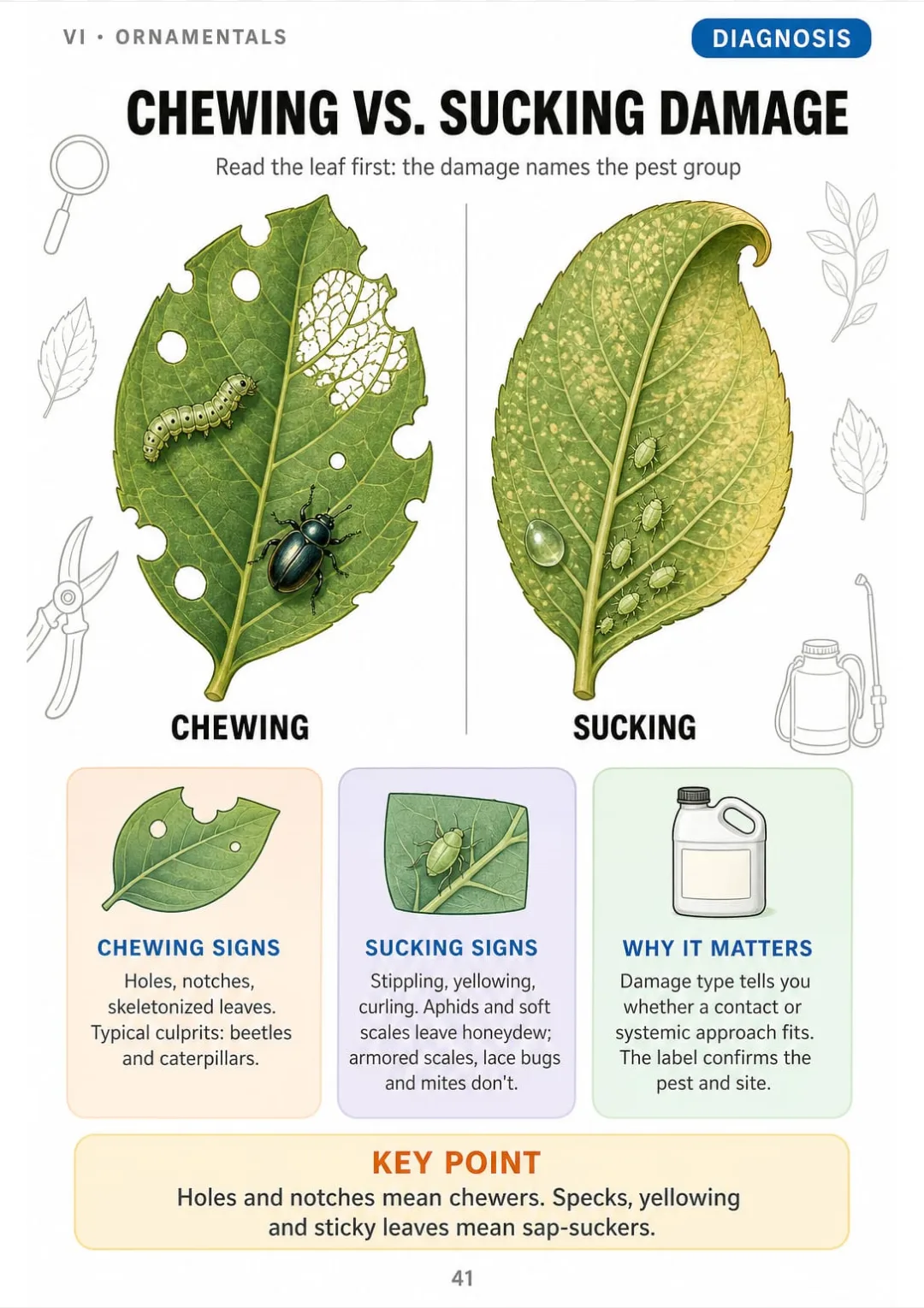
Chewing = holes and notches · Sucking = stippling, curling and honeydew
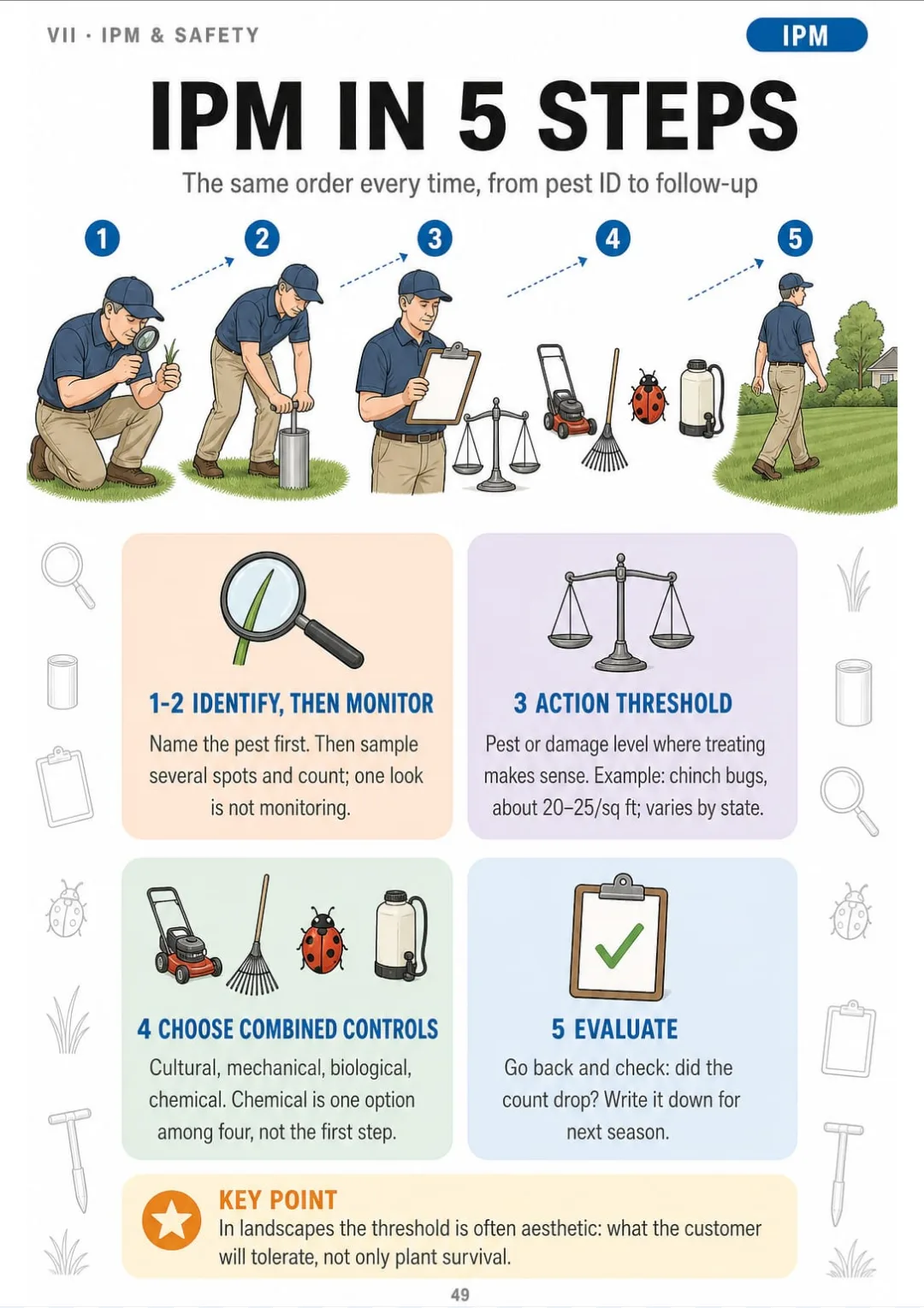
IPM in 5 steps: identify, monitor, threshold, combined controls, evaluate
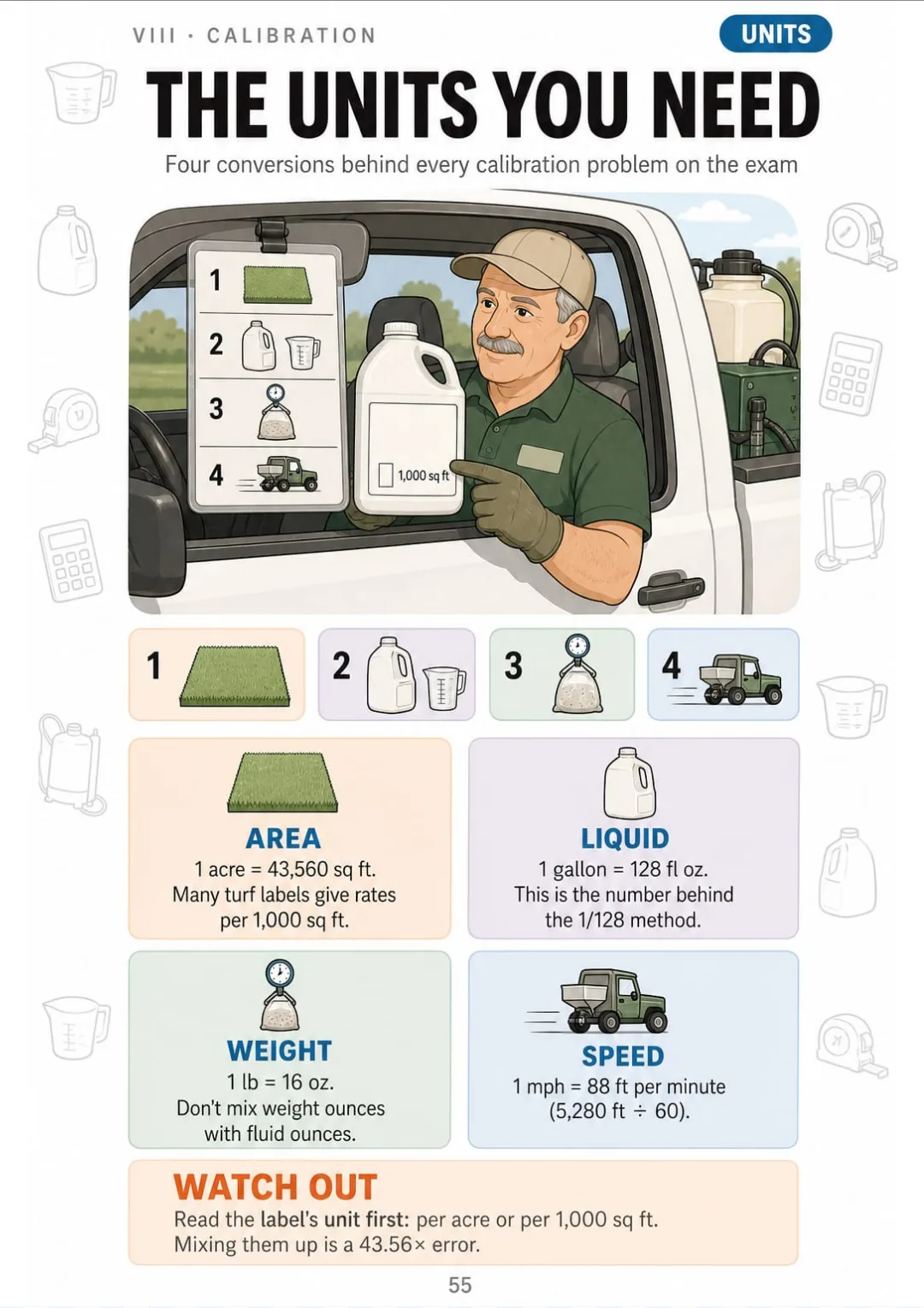
1 acre = 43,560 sq ft · 1 gal = 128 fl oz · 1 lb = 16 oz · 1 mph = 88 ft/min

Swipe to see more →

These are real pages from the book. The table of contents is the full one: 9 parts and 62 topics.

The Problem Isn't You. It's How It Was Explained to You.

It's Sunday night, the state manual is open on the kitchen table, and you're on the weed chapter. Summer annual, winter annual, perennial. You need to know which one sprouts when, because that decides when the product goes down.

The manual lays it out in long paragraphs: germination, flowering, seed set, dormancy, all in one block. By Monday morning, crabgrass and henbit have traded seasons. Nobody drew the cycle for you, so there's nothing to hold on to.

Summer annual, winter annual, perennial: each one has its own control window.

In the book, weed life cycles is one page. Three bands across the calendar: summer annual, winter annual, perennial. Each one has its control window marked right on it, so you see when the pre-emergent goes down and when it's already too late.

Grass ID, white grubs, the disease triangle, chewing vs. sucking damage, sprayer calibration: each one has its own page, with the drawing first.

You look at the calendar, you see the window, and you answer the timing question without going back to the manual.
COMPARE FOR YOURSELF

The Same Topic, Two Ways to Study It

THIS
  • The manual: line after line of text
  • Grass types explained only in words
  • You walk into the exam still unsure
Turfgrass species utilized in the United States are generally classified into two physiological groups based upon their optimum temperature ranges for growth. Cool-season species, including Kentucky bluegrass, tall fescue, perennial ryegrass and the fine fescues, exhibit maximum shoot growth at temperatures between 60 and 75 °F and frequently enter summer dormancy under heat and drought stress, whereas warm-season species, such as bermudagrass, zoysiagrass, St. Augustinegrass and centipedegrass, attain optimum growth between 80 and 95 °F and typically discolor following the first frost, consequently influencing the timing of fertilization and pesticide applications.
FOR THIS
  • Cool-season vs. warm-season in one drawing
  • The temperatures in a box: 60–75 °F and 80–95 °F
  • You see it and you get it
Cool-season grasses grow best at 60–75 °F, warm-season grasses at 80–95 °F.
CONTENTS

Take a Look at the 9 Parts and 62 Topics

The exam and the rules, turfgrass, weeds, turf insects, turf diseases, trees and shrubs, IPM and safe application, calibration math and a final review: 66 pages, all illustrated.

IThe Exam and the Rules · pp. 5-9
  1. Core vs. Category: Two Different Exams
  2. The Label Is the Law
  3. Signal Words at a Glance
  4. Restricted Use vs. General Use
  5. Records You Have to Keep
IIKnow the Turf First · pp. 10-16
  1. Cool-Season vs. Warm-Season Grasses
  2. Grass ID: Ligule, Auricles, Vernation
  3. Growth Calendar: When Each Grass Is Active
  4. Mowing: The One-Third Rule
  5. Watering: Deep and Infrequent
  6. Fertilizer Label: Reading N-P-K
  7. Thatch and Soil Compaction
IIIWeeds · pp. 17-25
  1. Weed Life Cycles: The Key to Timing
  2. Grassy, Broadleaf, or Sedge?
  3. Crabgrass
  4. Yellow Nutsedge
  5. Annual Bluegrass (Poa annua)
  6. Dandelion, Clover, Plantain
  7. Henbit and Common Chickweed
  8. Pre-Emergent vs. Post-Emergent
  9. Selective, Non-Selective, Systemic, Contact
IVTurf Insects · pp. 26-33
  1. Read the Damage Pattern
  2. White Grubs: Life Cycle
  3. Grubs: Dig, Count, Decide
  4. Preventive vs. Curative Grub Control
  5. Chinch Bugs and the Float Test
  6. Sod Webworms and Armyworms
  7. Billbugs
  8. Mole Crickets (Southern Turf)
VTurf Diseases · pp. 34-40
  1. The Disease Triangle
  2. Brown Patch
  3. Dollar Spot
  4. Pythium Blight
  5. Red Thread, Snow Mold, Large Patch
  6. Fairy Ring
  7. Fungicides: Preventive, Curative, FRAC Codes
VIOrnamentals: Trees and Shrubs · pp. 41-48
  1. Chewing vs. Sucking Damage
  2. Scales: Armored vs. Soft
  3. Aphids and Honeydew
  4. Spider Mites and the White Paper Test
  5. Bagworms
  6. Lace Bugs and Borers
  7. Ornamental Diseases at a Glance
  8. Timing with Degree Days and Plant Phenology
VIIIPM and Safe Application · pp. 49-54
  1. IPM in 5 Steps
  2. Formulations and Their Codes
  3. PPE and REI
  4. Drift: Wind, Droplets, Inversions
  5. Water, Pollinators, Non-Targets
  6. Spills: Control, Contain, Clean Up
VIIICalibration and Math · pp. 55-62
  1. Units You Need
  2. Measuring the Area
  3. Backpack Sprayer in 5 Steps
  4. How Much Product per Tank
  5. Boom Sprayer: The 1/128 Method
  6. The GPA Formula and Ground Speed
  7. Granular Spreader and Fertilizer Rate
  8. Active Ingredient Math
IXReview Before the Exam · pp. 63-66
  1. Weeds, Insects, Diseases: One-Page Recap
  2. The Seasonal Calendar
  3. Calibration Checklist
  4. Exam-Day Checklist

One Page, One Topic, All Clear

Think of it this way:

It's July and you're standing in a client's lawn with brown, dead-looking patches. Fungicide, grubs, or just a dry spot? You need to make the call before anything goes in the tank.

In the book, you open the damage-pattern page. Turf that lifts like a carpet: grubs. Damage along the sunny edges: chinch bugs. Chewed blades: caterpillars. Three patterns, drawn side by side.

Host + pathogen + favorable environment: take one away and there's no disease.

Same with brown patch and dollar spot, crabgrass and nutsedge, armored and soft scales, and boom calibration with the 1/128 method (the ounces you catch = gallons per acre): each one on its own page.

Turf & Ornamental Applicator Illustrated is 9 parts and 62 topics, all drawn, and it ends with a one-page recap, a seasonal calendar, a calibration checklist and an exam-day checklist.

What you see drawn, you don't have to memorize.

What's Inside Turf & Ornamental Applicator Illustrated:

Ipp. 5-9

The Exam and the Rules

Core vs. Category, the label as the law, signal words, restricted vs. general use and the records you have to keep: you know what each exam covers before you open the manual.

IIpp. 10-16

Know the Turf First

Cool-season vs. warm-season grasses, grass ID by ligule and auricles, the growth calendar, mowing, watering, N-P-K and thatch.

IIIpp. 17-25

Weeds

Weed life cycles, grassy vs. broadleaf vs. sedge, crabgrass, nutsedge, Poa annua, dandelion, henbit, pre- vs. post-emergent and herbicide types.

IVpp. 26-33

Turf Insects

Damage patterns, white grubs and how to count them, preventive vs. curative control, chinch bugs, webworms, billbugs and mole crickets.

Vpp. 34-40

Turf Diseases

The disease triangle, brown patch, dollar spot, Pythium blight, red thread, snow mold, fairy ring and fungicide FRAC codes.

VIpp. 41-48

Ornamentals: Trees and Shrubs

Chewing vs. sucking damage, armored and soft scales, aphids, spider mites, bagworms, lace bugs, borers and timing by degree days.

VIIpp. 49-54

IPM and Safe Application

IPM in 5 steps, formulations, PPE and REI, drift and inversions, water and pollinators, and how to handle a spill.

VIIIpp. 55-62

Calibration and Math

The units you need, measuring the area, the backpack sprayer in 5 steps, the 1/128 method, GPA, spreaders and active ingredient math: the tank questions, worked out in the same order every time.

IXpp. 63-66

Review Before the Exam

Weeds, insects and diseases on one page, the seasonal calendar, a calibration checklist and an exam-day checklist.

At the end of the book: A one-page recap, a seasonal calendar, a calibration checklist and an exam-day checklist.

Plus: 2 Free Books

Turf & Ornamental Practice Questions

BONUS 1: «Turf & Ornamental Practice Questions»

Value on its own: US$ 17.90

Exam-style questions on weeds, insects, diseases, IPM and calibration, each with the answer explained, so you find your weak spots before exam day.

BONUS 2The 15 Most Common Application Mistakes

BONUS 2: «The 15 Most Common Application Mistakes»

Value on its own: US$ 14.90

Before/after drawings of the mistakes applicators make most often, from wrong pre-emergent timing to skipped recalibration, so you can spot them and fix them.

Turf & Ornamental Applicator Illustrated with 2 Free Books

  • Turf & Ornamental Applicator Illustrated: 66 illustrated pagesUS$ 63
  • BONUS 1: Turf & Ornamental Practice QuestionsUS$ 17.90
  • BONUS 2: The 15 Most Common Application MistakesUS$ 14.90
  • High-resolution PDF to printIncluded
Total value US$ 95.80
YOUR PRICE:
US$ 27
You save US$ 68.80
YES, I WANT TURF & ORNAMENTAL APPLICATOR ILLUSTRATED FOR US$ 27

📄 This is a digital PDF book sent to your email: nothing is printed or shipped.

Secure purchaseEncrypted payment30-day guarantee

PDF by email: We email you Turf & Ornamental Applicator Illustrated as a PDF, together with the two free books. It's a single payment: no installments, no extra charges.

Who This Book Is For

You're studying for the category exam

You're studying for the category exam

Every weed, grub and lawn disease has its own drawn page, so you can study in short sessions after work and still keep it straight.

Your exam date is set

Your exam date is set

The review part puts weeds, insects and diseases on one page, plus the seasonal calendar and the calibration checklist to go over in the last few days.

You already run routes

You already run routes

Print the pages you use most and keep them in the truck: damage patterns, control windows and tank math, right where you need them.

Everything You Get Today

US$ 95.80US$ 27
YES, I WANT TURF & ORNAMENTAL APPLICATOR ILLUSTRATED FOR US$ 27

📄 This is a digital PDF book sent to your email: nothing is printed or shipped.

30DAYS
GUARANTEE

30-Day Guarantee

Try Turf & Ornamental Applicator Illustrated for 30 days, bonus books included.

We refund everything if the file won't open, if the book isn't what you see here, if you were charged twice or if the email doesn't arrive. Just email us.

You pay once. No subscriptions.

Frequently Asked Questions

Is it for me if I've been doing lawn care for years and haven't taken a test in decades?

Yes. It doesn't treat you like a beginner: it puts what you already see on the job in order, one drawn topic per page, so you can study in short sessions.

Where does the content come from?

From the state Turf & Ornamental category manuals, the federal certification standards in EPA 40 CFR Part 171, FIFRA and product labels. Rates, thresholds, category numbers and posting rules are marked so you can check them against the current edition of your state's manual.

Is this official material, and does it work for my state?

No. It's an independent illustrated study guide. It covers the topics state Turf & Ornamental category exams share under EPA 40 CFR Part 171. Category numbers, rates and posting rules change by state, so they're marked for you to check against your state's manual and the label, which remain the official references.

Does it replace my state's manual or required training?

No. It's a companion to them: the same topics, drawn, so they're easier to review. Use it next to your state manual, not instead of it.

Are the practice questions the ones on the exam?

No. They're written for this book to help you find your weak spots. They are not official questions from any state exam.

When and how do I get it?

You get it as a PDF by email, at the address you enter at checkout.

Do I have to pay every month?

No. It's a one-time payment.

Can I have it on paper?

Yes. It's a PDF you can print at home or at any print shop, the whole book or just the pages you want in the truck.

How does the refund work?

You have 30 days. We refund everything if the file won't open, if the book isn't what you see on this page, if you were charged twice or if the email doesn't arrive: just email us.

Before You Close This Page

No more rereading the manual without anything sticking.

Crabgrass, grubs and brown patch: you see them drawn, and they stick.

You walk into the exam knowing where everything is.

Drawings make studying faster.

The book is right below.

One-time payment: US$ 27 · Guarantee: 30 days · PDF by email

YES, I WANT TURF & ORNAMENTAL APPLICATOR ILLUSTRATED FOR US$ 27

📄 This is a digital PDF book sent to your email: nothing is printed or shipped.